
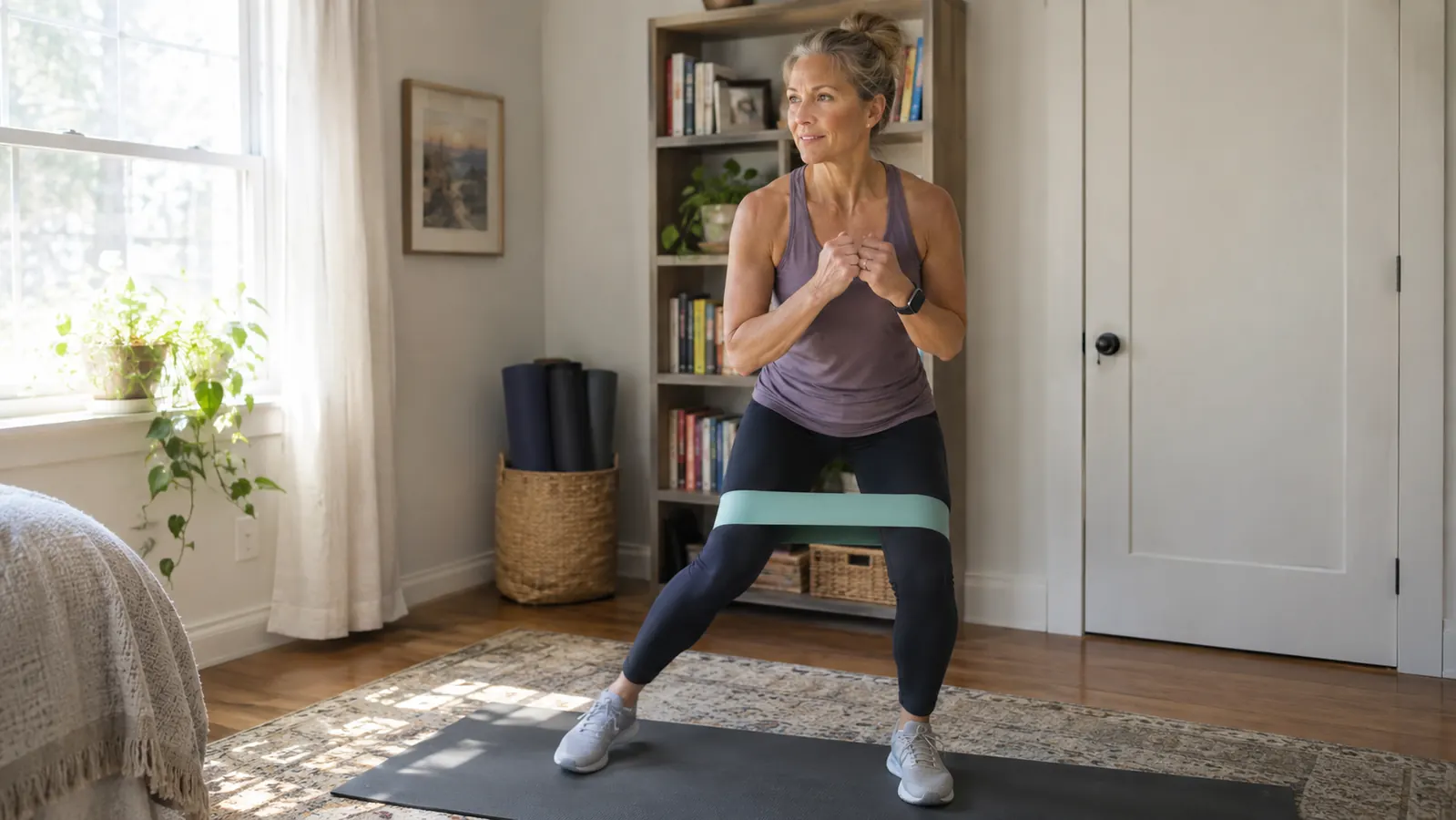
I am Linda, 57, a retired school librarian in Springfield, Missouri. Two years ago my knees started complaining on the stairs, and I decided I was done waiting for a better time to get healthier. Walking came first. Strength work came second, and for me that meant a simple set of Fit Simplify resistance loop bands in the spare bedroom.
I am not a trainer and nothing here is medical advice. This is what I have learned from using these bands at home a few times a week, written down the way I keep track of everything else, in a spiral notebook. Here are ten reasons resistance bands have earned a permanent place in my routine, and why I think they suit anyone starting strength work after 40.
See Today's Price on Amazon
The Fit Simplify Resistance Loop Bands come as a five-band set with a guide and carry bag. Check current pricing on Amazon.
Amazon Check Today's Price on Amazon →They Are Gentle on Knees That Complain
When I started trying to get healthier at 55, my knees were the reason. They ached on the stairs, and anything with jumping made them worse for a day or two. The Fit Simplify resistance bands let me work my legs without pounding on those joints. A loop around my thighs for side steps, a band under my feet for a slow squat to a chair, and my knees get stronger instead of angrier. The tension builds gradually through the movement, so there is no jolt at the bottom the way there is when you drop into a squat holding a heavy weight. I still go slowly, and on a bad knee day I do seated work only. But I have not had to skip a whole week of strength work since I started with bands, and that consistency is the thing that matters most after 40.
Five Levels Let You Start Small
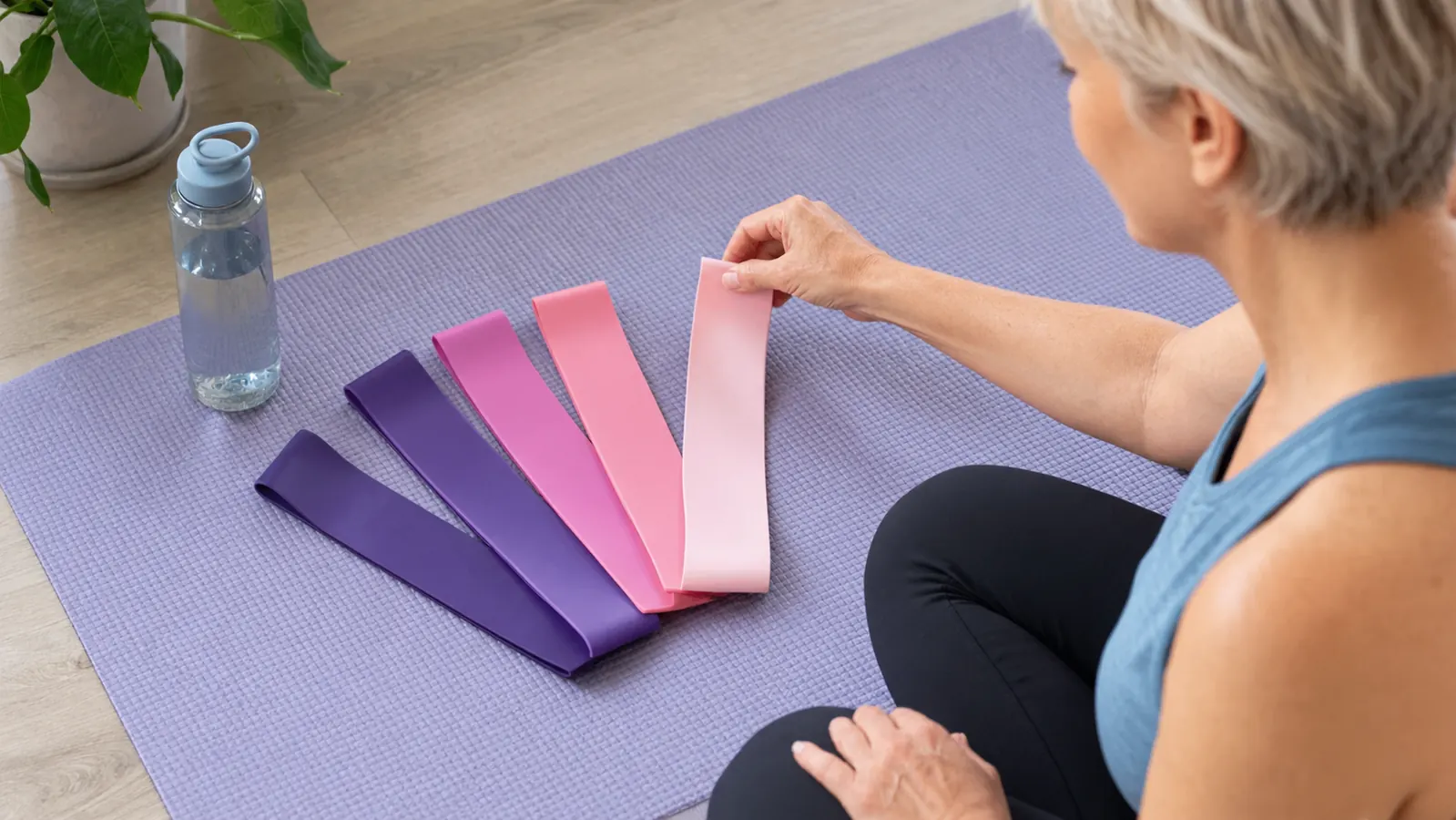
The set comes with five loops, from extra light to extra heavy, and each one is a different color so you can see at a glance which you grabbed. I began almost everything on the yellow extra light band, and I was not embarrassed about it. After about three weeks my side steps felt easy, so I moved to the next one up. Having that ladder right there in the bag is what keeps me progressing. With a single band you either outgrow it or never grow into it. With five, there is always a next step that is only a little harder, and I write the color I used next to each exercise in my notebook so I know when it is time to move up.
They Fit in a Drawer, Not a Spare Room
Our spare bedroom is small. It holds a futon, my bookshelf and a yoga mat, and that is about it. A rack of dumbbells was never going to fit, and my husband Dale did not love the idea of weights on the carpet either. The bands live in their little carry bag in the top drawer of the nightstand. When I am done, the whole gym goes back in the drawer and the room is a guest room again. If you have ever put off exercise because setting up felt like a project, this matters more than it sounds. The shorter the distance between deciding to work out and actually starting, the more often you will start.
Strength Work Helps You Keep Muscle While You Lose Weight
This is the reason I wish someone had told me sooner. When you eat less to lose weight, some of what comes off can be muscle, not just fat, and we lose muscle more easily as we age anyway. Regular strength work gives your body a reason to hold on to it. I am not building big muscles and never wanted to. I just want to carry the laundry basket up the stairs, get up off the floor without grabbing the couch, and keep my metabolism from slowing more than it has to. Two or three short band sessions a week, paired with the protein I talk about in my protein powder review, is how I approach that. Your doctor can tell you what makes sense for your own body.
They Cost Less Than a Month of Gym Fees
I am a retired school librarian, and I read the price tag before I read anything else. The Fit Simplify set costs less than one month at most gyms around here, and it has lasted me well over a year. There is no membership to cancel, no drive across town, and no one watching me wobble through my first set of bridges. If you are not sure strength work is for you, this is a low-risk way to find out. If it ends up in a drawer, you have not lost much. If it becomes a habit, it is some of the best money you will spend on your health.
You Can Do a Whole Workout in Fifteen Minutes
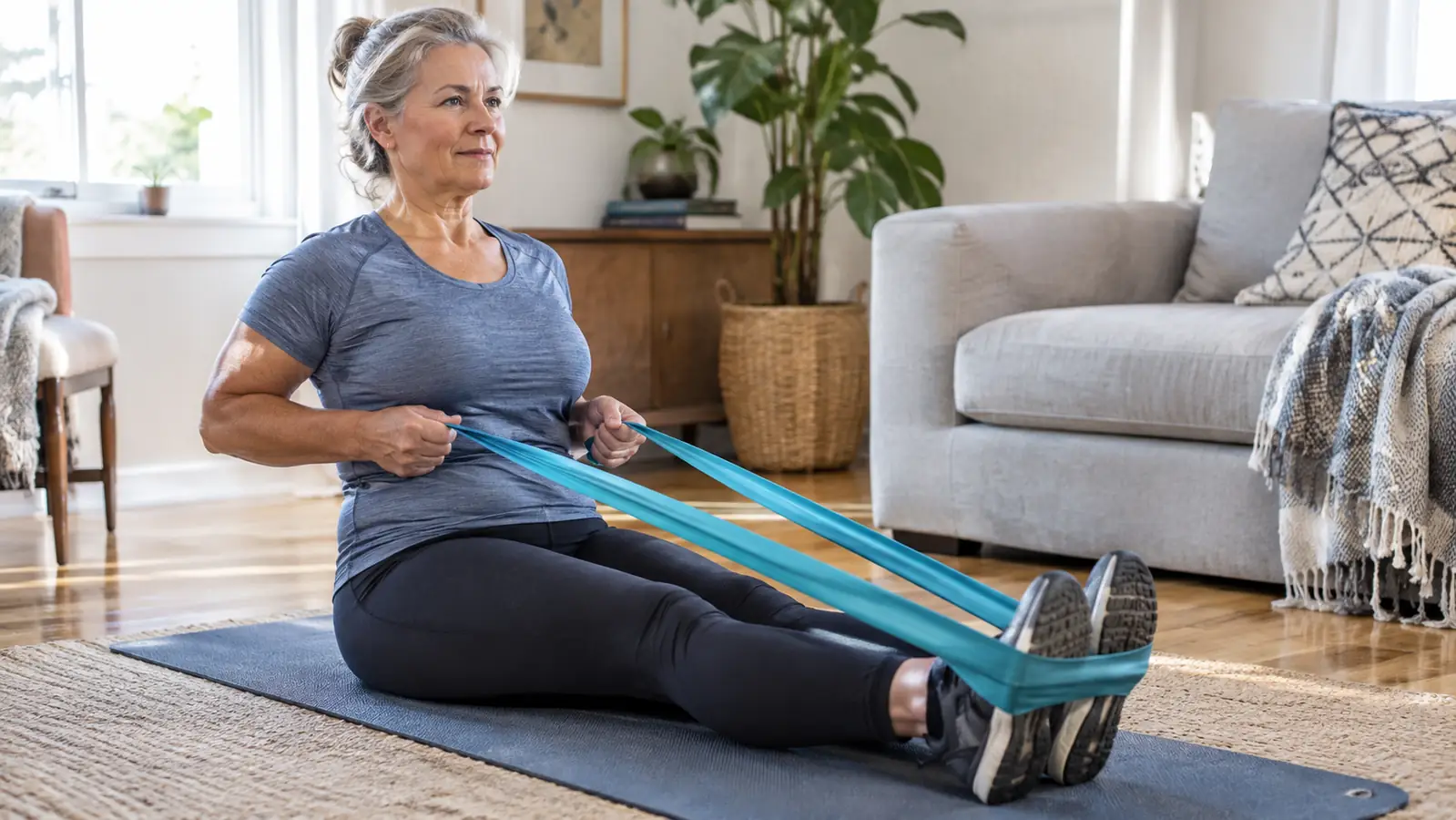
Most mornings I walk with my neighbor, and some afternoons I just do not have the energy for a long session. Fifteen minutes with the bands is enough to count. My short routine is side steps, glute bridges, seated rows with the band around my feet, a slow squat to a chair, and a standing press for my shoulders. Two rounds of that, and I am done before the kettle has cooled. Short workouts are easier to say yes to, and saying yes most days beats a perfect plan you never start. If you want a step-by-step version, I laid mine out in how to build a home workout routine with resistance bands.
The Instruction Guide Takes the Guesswork Out
The bands come with a small printed guide showing a set of basic exercises with simple drawings. I was nervous about doing things wrong, and that guide was my starting point. It showed me where to place the loop for each move, which I had honestly never thought about. Above the knees and around the ankles feel completely different. After a couple of weeks I had the moves memorized, but on day one it was the thing that got me off the futon and onto the mat. For a beginner, a little structure goes a long way.
They Work for Upper Body Too
I assumed loop bands were only for legs and hips, because that is what I kept seeing online. They are good for that, but I also use them for my arms and back. With the band around my wrists, I do slow pull-aparts that make my shoulders feel better after a long stretch of reading. Stepping on a band and pulling up works my arms. Anchoring one under my feet while I sit gives me a gentle row for my upper back, which helps my posture. One small bag covers nearly every part of my body, which is part of why I stopped looking at other equipment.
They Pair Well With Walking
Walking is the base of my whole routine. I walk most mornings, rain or shine, and on icy days I use a walking pad at home. Walking does wonders for my mood and my step count, but it does not do much for my upper body or for the side of my hips. Bands fill that gap. On walking days I often do five minutes of side steps and bridges when I get home while my shoes are still on, and my hips feel steadier on the hills because of it. If you are curious how bands stack up against weights for this kind of routine, I compared them in resistance bands vs dumbbells.
They Travel Anywhere
When Dale and I visited his sister in Tulsa last spring, the Fit Simplify bag went in my suitcase next to my book. It weighs almost nothing and takes up less room than a pair of shoes. I did my short routine on the guest room floor every other morning, and I came home without the usual slump that comes from a week of being off my habits. Hotel gyms are hit or miss, and I never want to use them anyway. A set of bands means travel does not have to mean a week off. Like anything else, check them for nicks or thin spots before each use, especially after they have been packed.
The Bottom Line
None of these bands do the work for you, and no piece of equipment will. What they do is remove almost every excuse I used to have: cost, space, sore knees and not knowing where to start. Paired with better food, daily walking and decent sleep, they have helped me feel stronger and steadier than I did at 55.
The shorter the distance between deciding to work out and actually starting, the more often you will start.
If you have a joint problem, a heart condition or you are new to exercise, check with your doctor before starting, and begin on the lightest band. You can read more about how they have held up over time in my long-term review of the Fit Simplify bands, or the story of how I finally started strength training at home.
Ready to Start Small?
Five levels, one small bag, and a guide to get you going with Fit Simplify.
Amazon Check the Fit Simplify Bands on Amazon →