
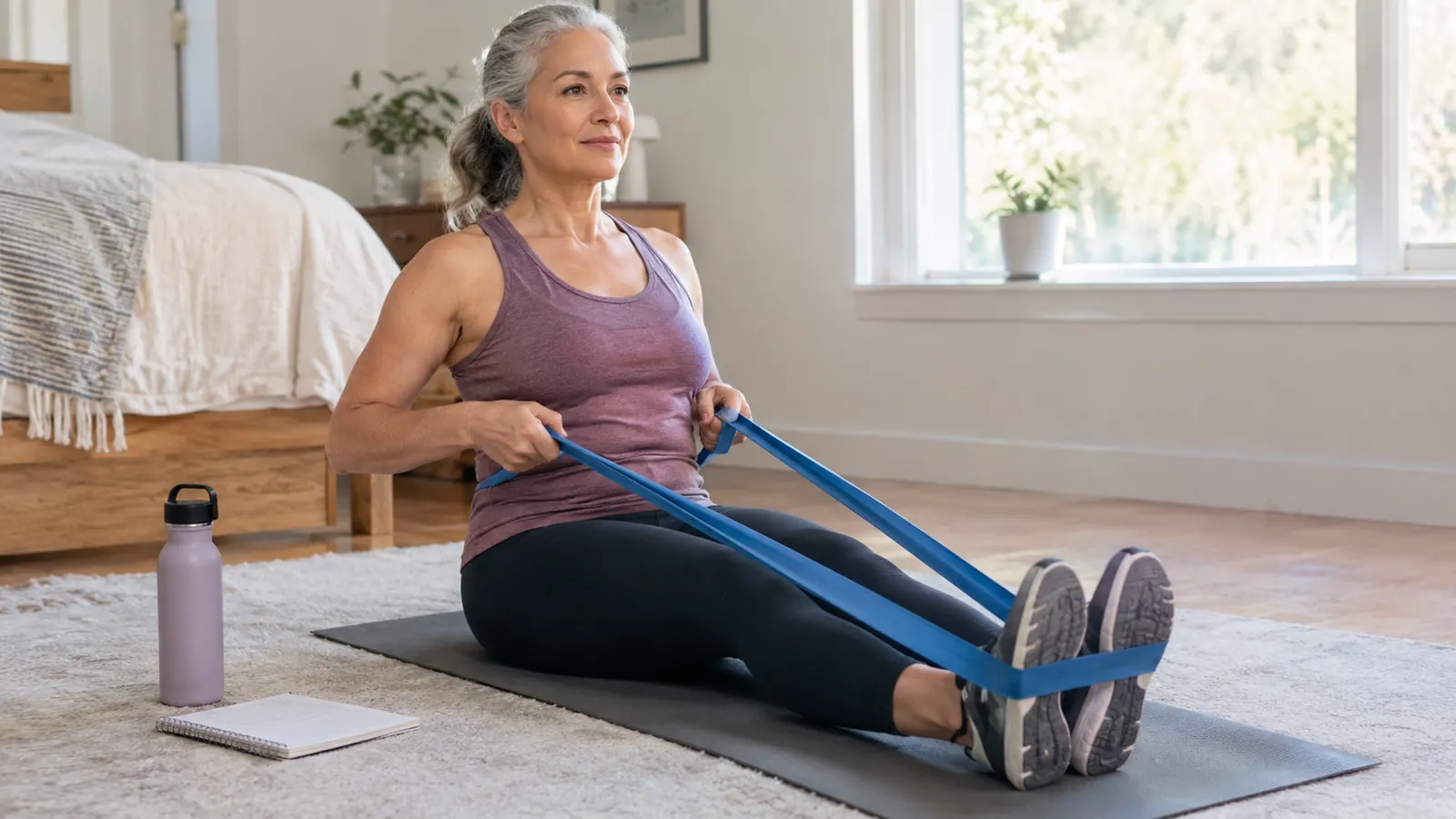
I bought my first set of Fit Simplify resistance loop bands on a Tuesday in January, after my neighbor mentioned her own set for the third time that month. We walk together most mornings, and while the walking had helped me lose a few pounds over two years, it had not done much for my arms or the stiffness I felt in my knees on the stairs. I wanted something simple I could do in the spare bedroom without a gym membership or a rack of equipment. The bands arrived two days later in a small cloth bag with an instruction guide, and they have been part of my routine ever since.
I will be honest that I did not expect much. I had tried a couple of home workout ideas in the past, and most of them ended up in the closet with the holiday decorations. What made me try these was the number of reviews on Amazon and the fact that the set came with a guide written for people like me, people who need to be shown a move before they feel confident doing it. I am 57 years old and I like to read the label before I buy anything, so a product with a printed guide and a carry bag felt more serious than a loose handful of rubber bands.
The Quick Verdict
A durable, beginner-friendly set of resistance bands that made my home strength work noticeably more effective without taking up space or demanding much skill.
Amazon Check Today's Price →The Bands That Finally Got Me Strength Training at Home
After months of daily use, Fit Simplify's loop bands are the piece of equipment I reach for most. If you want a low-cost way to add resistance to walks, stretches and strength moves, this set is a great place to start.
Amazon Check Today's Price on Amazon →How I've Used It
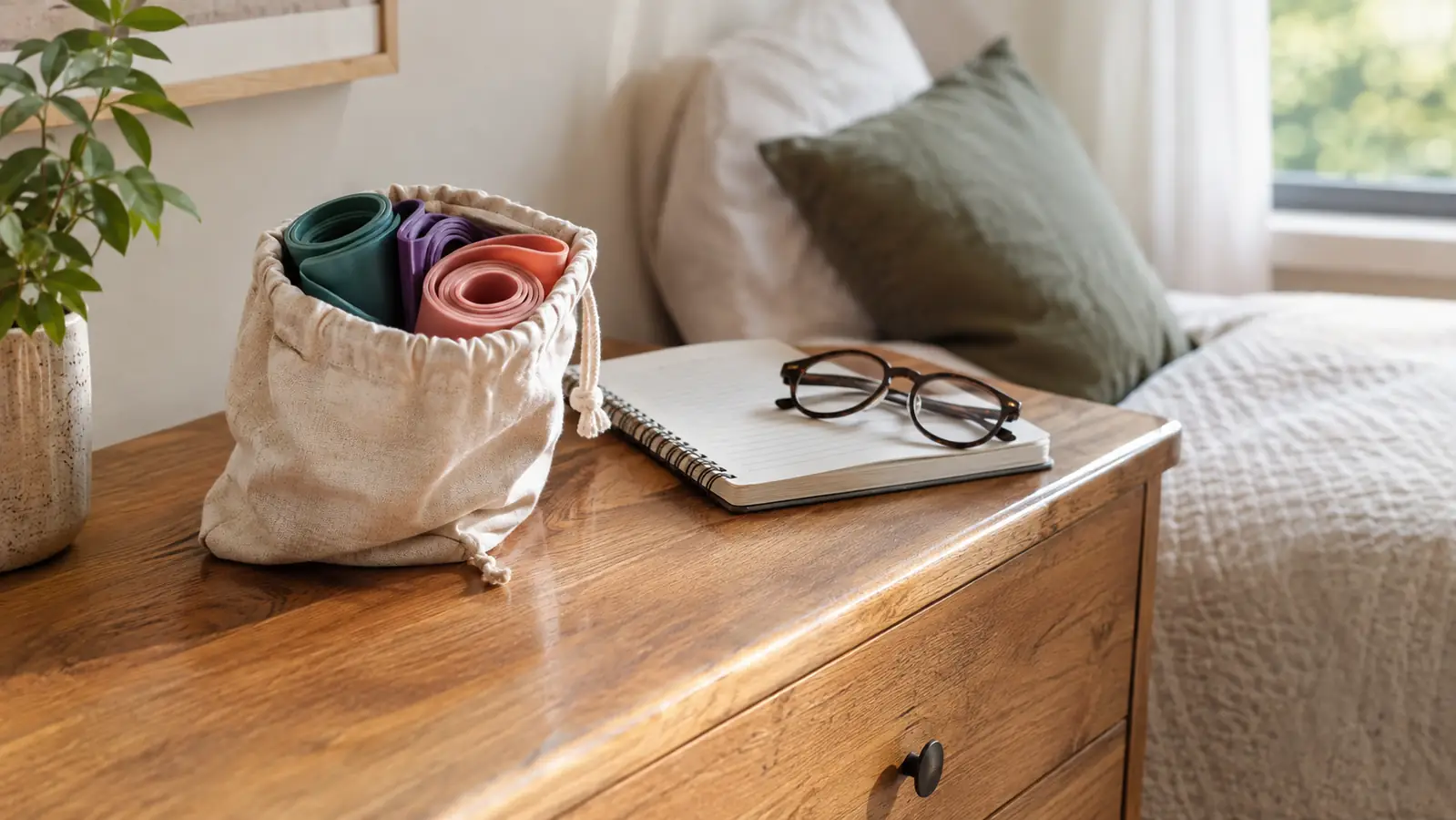
I keep my spiral notebook on the dresser in the spare bedroom, and I started a new section for band work in the first week. The set includes five bands with graduated resistance, from a very light one I could stretch without much effort to a firm one that still challenges me months later. I began with the lightest band for about ten minutes after my morning walk, doing the moves from the instruction guide: bicep curls, shoulder presses, lateral raises, and lower body moves like banded squats and side steps.
Three mornings a week turned into five. I would come home from the walk, change out of my walking shoes, and spend ten to fifteen minutes in the spare bedroom before my shower. The bands let me work at my own pace, and because the resistance is smooth from the start of a move to the end, I never felt like I was jerking the way I do with dumbbells I have grabbed too quickly. I wrote down which band I used and how many reps each day, mostly to keep myself honest.
After about three months, the lightest band stopped feeling like work, so I moved up a level, then another a few weeks after that. I also started using a band in the evenings for stretching, which surprised me. I had thought of them as a strength tool, but a loop band around my thighs for a glute stretch or held overhead for a shoulder stretch turned out to be one of the most useful parts of the whole set.
What's Actually in the Box
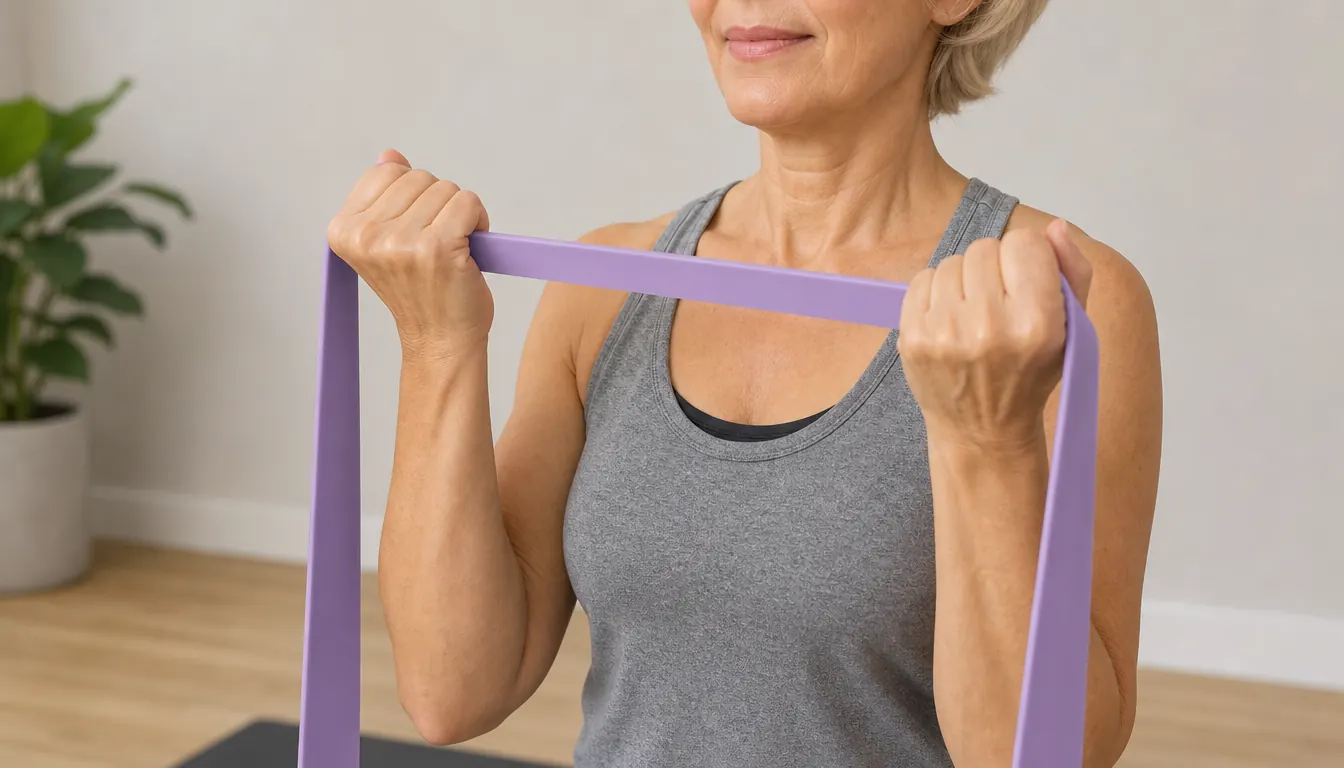
The set comes with five loop bands in graduated resistance levels, a small carry bag, and a printed instruction guide. The guide shows a handful of basic exercises with simple drawings, which is exactly the right amount of information for a beginner. It does not try to turn you into an athlete. It shows you a bicep curl, a shoulder press, a lateral walk, and a few leg moves, and it gives you a sensible place to start.
The bands themselves are thick and smooth, with no rough edges and none of the powdery smell I expected from cheap rubber. The lightest one stretches easily, and the firmest one gives me a genuine struggle by the end of a set. The carry bag has room for all five bands and keeps them together in my dresser drawer, which sounds like a small thing until you have owned a set of loose bands that end up tangled in a kitchen drawer.
I also appreciate that Fit Simplify includes a printed guide instead of only pointing you to a website. I am comfortable with a phone, but I like to spread the guide on the bed and follow along without holding a screen. For my age group, that small detail matters more than the manufacturer probably realizes.
How They've Held Up Over Months of Use
This is the part I most wanted to test, because I have owned rubber things before that turned sticky, cracked, or lost their stretch within weeks. After months of near daily use, the Fit Simplify set looks and feels the same as the day it arrived. The lightest band, which I used almost every day at first, still snaps back with the same tension. The edges, where I step on them for lower body moves, show no tears or fraying.
I do take one precaution. I inspect each band before I use it, running it through my fingers for any rough spot, and I never stretch a band past about double its resting length. That habit is part of the reason I have never had one snap on me. I have read reviews from people who did have a band break, usually after months of heavy use, so I do not treat them as indestructible. They are rubber, and they will eventually wear out. But after this long, mine show no sign of it.
What surprised me most is how the workouts themselves have changed. I do not mean that I look different, because I am not going to promise anyone a transformation. I mean that the moves feel different. Banded side steps strengthened my hips and legs, and the stairs feel easier than they did last year. My arms are firmer, and I can hold a plank longer without my shoulders giving out. I have no idea if any of that shows in a mirror, but it shows in my notebook, where the number of push-ups I can do has gone from four to eleven.
The Real Tradeoffs
I want to be straight about the downsides, because every honest review has cons, and this one is no different. The first is that loop bands have a ceiling. They are excellent for building strength and stamina at home, but they cannot replace a heavy set of dumbbells or a gym full of machines for someone who wants to push serious weight. At some point the firmest band in this set will stop being enough, and you will need to either buy stronger bands or graduate to weights.
The second downside is that the bands can pinch. If you let a band roll over itself during a lower body move, the edge can dig into your skin. The fix is simple: make sure the band lies flat and does not twist before you start. I learned this the hard way on a banded squat in the second week, and now I check every time.
The third tradeoff is that you have to be willing to follow instructions and check your form. The guide covers the basics, but for a few moves I wanted a better view, so I looked up short videos online. If you are the kind of person who will not spend ten minutes learning a move, the bands will still work for you, but you will get more out of them if you do.
How to Choose the Right Resistance Level
The guide recommends starting with the lightest band and working up, and I think that is the right advice for most people over 40. I spent my first three weeks on the lightest band, and it was enough to make my muscles feel the work the next day. When a move stopped feeling challenging, I moved up one level. That gradual approach is how I avoided the soreness that makes people quit in the first week.
One thing I learned the hard way: the right band depends on the move, not just your overall strength. I can use a firmer band for a bicep curl, but I need a lighter one for a lateral raise or a banded side step, because those moves work smaller muscles. Keep all five bands nearby and swap them as you go. That is the advantage of a set like this over a single band.
Alternatives I Considered
Before I settled on these, I looked at three other options. The first was a set of dumbbells, which I seriously considered because everyone in my online reading seemed to own a pair. But dumbbells are heavy, they take up floor space, and I knew from past experience that I would drop one on my foot within the first month. The bands cost less, store flat, and cannot crush my toes when they fall.
The second option was a set of tube bands with handles, the kind that look like they came from a physical therapy office. They have their place, especially for moves that need a handle, but the loop design of the Fit Simplify set is simpler for lower body work and easier to pack. I also found the loop bands more forgiving when my grip got tired.
The third option was to just keep walking and skip strength work entirely. That had been my choice for two years, and it is the reason my arms still felt soft. Walking is good for me and I am not giving it up. But adding twenty minutes of band work a few times a week is the change that made the difference, and it is the reason this set is still in my routine months later.
I went from four push-ups to eleven, the stairs feel easier, and the bands still stretch exactly as they did on day one. That is what months of steady use looks like.
What I Liked
- Five resistance levels, from very light to genuinely challenging, so you can progress without buying a new set
- Durable after months of daily use, with no cracks, no fraying, and no lost tension
- Compact enough to keep in a dresser drawer or pack in a suitcase
- The printed instruction guide is simple enough for a true beginner
- Easy to combine with walking, stretching, or a full strength session
Where It Falls Short
- Loop bands have a ceiling; heavy lifters will outgrow the firmest band
- The bands can pinch if they roll over during lower body moves
- You have to inspect them for wear, since any rubber product eventually needs replacing
- The lightest band may feel too easy if you already strength train regularly
Who This Is For
If you are in your forties, fifties, or sixties and you want to add strength work to your routine without a gym membership, these bands are a sensible place to start. They suit people who already walk and want to add resistance, people with limited space, people who travel, and people who want to ease into strength training at their own pace. If you are the kind of person who reads the label, keeps a notebook, and prefers a printed guide to a video, you are exactly the audience for this set.
I would also recommend them to anyone whose joints complain about heavy weights. Band work is gentle on the knees and shoulders while still giving your muscles something to work against. That combination is hard to find in most home gym equipment.
Who Should Skip It
If you already lift heavy weights, these bands will feel like a warm-up, not a workout. If your goal is maximum muscle gain, you will be better served by dumbbells, a barbell, or a gym membership. And if you want equipment that never needs a second thought, rubber bands may frustrate you, because they do require a quick inspection before use, and they will eventually wear out like any rubber product.
I would also tell someone who will not follow the guide to skip it. The bands work best when you use them with a little care about form, and if that sounds like a chore, you are better off with a walking habit alone. There is no shame in that. Walking is what got me started.
Six months in, these bands are still in my routine, and that is the highest compliment I can give any piece of exercise equipment. They are not exciting. They do not promise shortcuts. They simply work, a little bit at a time, and that is how I plan to keep going. Even Dale, who eats whatever he wants and has never once joined me for a workout, asked me last week to show him the shoulder press.
Add Real Resistance to Your Home Routine
Fit Simplify's loop bands have earned a permanent spot in my spare bedroom. If you want a simple, honest way to strengthen at home without a gym membership, this set is a good place to start.
Amazon Check Today's Price on Amazon →