

When I started reading about glucomannan, every review I found made it sound like the answer to a question I had been asking for years. Take a capsule, feel full, eat less. That version sounded too good to be true, and I have lived long enough to know that usually means it is. So I did what I always do with a supplement that interests me. I wrote the claims down in my spiral notebook, read the research summaries, and then I bought a bottle of Nutricost Glucomannan anyway, mostly to prove to myself that it would not work. This is what I learned over eight weeks of taking it, and I am including the parts I would have rather not known.
The short version is that it worked, but not the way the ads describe it, and the gap between those two versions is exactly what I want to walk you through. If you are over fifty, losing weight slowly, and tired of products that promise more than they deliver, this review is written for you. I am not a doctor and I am not selling anything. I am a retired librarian who reads labels, keeps a notebook, and likes to know what I am putting in my body before I spend money on it.
The Quick Verdict
Glucomannan is a useful appetite support tool when you treat it like a tool, not a magic wand. It helped me feel full between meals, but only when I took it right, drank enough water, and kept up my walking. The honest part is that it is gentle, not dramatic, and that is the truth most reviews skip.
Amazon Check Today's Price →Curious whether Nutricost Glucomannan fits your routine?
The details that matter, capsule size, the water rule, and the timing, are all in the current listing, and the recent reviews are honest about both sides. A bottle of 180 capsules lasts a long time, so it is worth a look before you decide.
Amazon Check Today's Price on Amazon →How I've Used It
Eight weeks, one capsule roughly thirty minutes before my two biggest meals, with a full glass of water. I chose the times when I knew I would be hungriest, which for me is the late afternoon and the evening. I also made myself follow the one rule I kept reading in the fine print, which is that glucomannan needs water to do its job. It is a fiber that swells, so without enough liquid it just sits there and does very little. I aimed for a full glass, sometimes a glass and a half, and I counted that water toward my daily total in the notebook.
I did not change anything else at first. I kept my usual breakfast of eggs and fruit, my morning walk with my neighbor, and my evening routine of reading a chapter in bed instead of snacking. My goal was to see whether the glucomannan itself made a difference I could feel, before I added any other changes. After two weeks I could tell the difference, and it was not dramatic. It was steady. The hungry feeling that used to arrive around four in the afternoon showed up later and lighter, and by the time dinner rolled around I was not reaching for seconds the way I used to.
I want to be clear about the dosage because the label can be confusing. Each serving is 1,800 milligrams, which comes as three capsules. I started with one capsule to give my stomach time to adjust, then worked up to a full serving over the first week. That slow start is the reason I had so little digestive upset, and I would recommend the same approach to anyone else, especially if fiber is not already a big part of your diet.

What Glucomannan Actually Is, and What the Research Says
Glucomannan is a water-soluble fiber that comes from the root of the konjac plant. It is the same fiber that makes konjac noodles and some sugar-free jellies, and it has been eaten in parts of Asia for a very long time. When it meets water it expands, and in the stomach that expansion creates a feeling of fullness that can last. The research summaries I read described it as a satiety aid, not a weight loss pill, and that distinction turned out to matter a great deal once I started using it.
I almost skipped it entirely because of the way the category is usually marketed. The phrases in the ads promised more than any capsule should. I am not saying the Nutricost product itself overpromises, only that the category has a reputation I did not want to buy into. What convinced me to try it was the plain description on the label: 1,800 milligrams per serving, gluten free, and nothing else I had to decode. That clean label was a relief after the other bottles I had picked up and put back in the store.
Before I bought anything, I looked at the summaries of the studies I could understand, and I am not going to pretend I read every journal article. The consistent finding was that glucomannan can help with feelings of fullness and with appetite, especially when it is taken before a meal with plenty of water. What the studies did not promise was a specific number of pounds lost, and I noticed that the most honest research summaries were the quietest about results.
That matched my experience. The fiber did not make me eat less on its own. It made me want less, which is a different thing, and that made the rest of my choices easier. I think the research community would say it is a reasonable addition to a weight management plan, not a replacement for one. I would add that it is worth asking your doctor or pharmacist about, because glucomannan can affect how your body absorbs other supplements and medications, and that is a conversation worth having before you start.
The Part That Worked: Fullness That Lasts
The honest version is that the fullness was real, but it was not the dramatic I forgot to eat dinner feeling the ads imply. It was more like a door that closed gently. I would take the capsule, drink my water, and about twenty minutes later the edge would come off the hunger. The difference showed up most clearly at dinner, because I would finish my plate and not feel the pull to go back for seconds the way I used to.
I tracked this in my notebook because I do not trust my memory. I wrote down what I ate, when I took the capsule, and how hungry I felt an hour later on a scale of one to ten. The pattern held. On the days I took it properly, my evening snack craving dropped from a six or seven to a three. On the days I skipped it or drank only a sip of water, the number stayed high. The Nutricost capsules were part of that pattern, and the product was not doing anything mysterious. It was doing exactly what a swelling fiber should do, and the data in my notebook backed that up.
What Nobody Tells You: Water, Timing, and the Swallow Factor
This is the part the cheerful reviews skip. The capsule is not small. It is a standard size, but if you have ever struggled with a pill, this is a capsule you will notice. You have to take it with a full glass of water, which means you cannot just swallow it dry at your desk and move on. And you have to take it well before your meal, not at the same time, because the fiber needs a little lead time to expand in your stomach before the food arrives.
Timing also matters for the rest of your day. If you take it too close to other supplements or to medication, the fiber can slow how quickly your body absorbs them. This is a real consideration, and it is the main reason I told my neighbor, who takes daily medication, to check with her pharmacist before she tried it. I am not a doctor and I do not give medical advice, but I can read a warning label, and the label on this bottle is clear about taking it at a different time from other things.
The water requirement is the detail most reviews bury. I have to plan around it. I keep a water bottle on the kitchen counter and I fill it when I take the capsule, so I have no excuse. On the days I rushed, I could tell the difference, and not in a good way. The fiber did not swell as it should, and I did not get the same fullness. If you are not someone who drinks much water, this product is going to be a struggle, and I would rather tell you that now than have you discover it after buying a bottle.
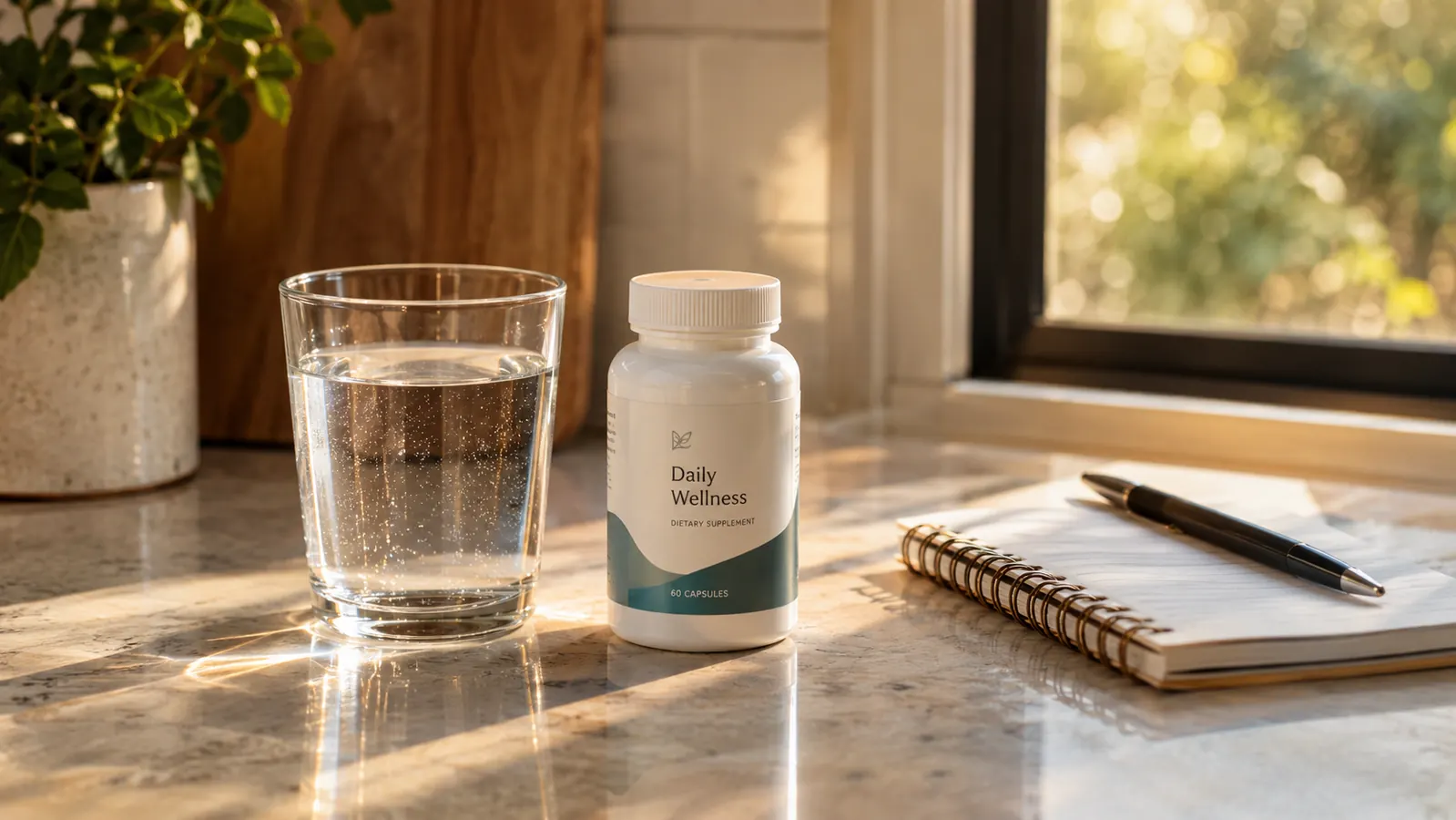
The Downsides I Hit: Gas, Pills, and the Missed-Medication Risk
I will be honest about the first week. There was gas. Not painful, not constant, but present enough that I was glad I was not in a meeting. My body had to adjust to the extra fiber, and it made its opinion known for the first several days. That settled down after about a week, and it helped when I made sure I was drinking enough water throughout the day, not just with the capsule. If you already eat a high fiber diet, you may not have this problem. If you do not, expect a short adjustment period.
The second downside is that the pill is easy to skip when you are in a hurry. A capsule that needs a full glass of water and a thirty minute lead time is a capsule that takes effort, and on busy days I forgot. I missed maybe four or five doses over the eight weeks, and each time I noticed the difference in my evening hunger. That is not a flaw in the product. It is a flaw in my routine, and it is worth knowing before you start because it tells you what to expect.
The third thing nobody mentions is the medication timing. Glucomannan can affect how quickly your body absorbs other things, so if you take any prescription, you should take the glucomannan a couple of hours apart. I do not take daily medication, so this was easy for me. My neighbor does, and she asked her pharmacist, who told her the same thing I had read. This is not a reason to skip the product. It is a reason to plan, and a reason to have a conversation with your pharmacist before you start.
How It Fits Into a Real Week, Not a Promise
I am not someone who loses weight quickly, and I have made peace with that. My approach is steady. I walk most mornings with my neighbor, I do a short workout in the spare bedroom a few times a week, and I try to sleep on a schedule. The glucomannan is one small piece of that routine. It helps me feel full between meals, which makes the rest of my choices easier, but it does not do the walking for me and it does not make the salad taste like dessert.
I think the honest way to describe it is as a support tool. It supports the habits I already have. On its own it would not have changed much, and I say that without disappointment, because no capsule should be expected to carry a whole lifestyle. What it did was take the edge off my hunger at the two hardest times of day, and that made everything else feel less like a fight. That is the real value, and it is the thing the marketing never quite says out loud.
What I Liked
- Fullness that actually lasted through the afternoon, backed up by my own notes
- Simple, clean label from Nutricost with no filler ingredients to decode
- Easy to fit into a steady routine once I built the water and timing habit
- A bottle of 180 capsules lasts a long time, so it is simple to keep stocked
Where It Falls Short
- The capsule is not small, and it needs a full glass of water to work properly
- Mild gas during the first week while my body adjusted to the extra fiber
- Has to be timed away from other supplements and medications
- The effect is gentle, not dramatic, which will disappoint anyone expecting a quick change
Glucomannan is a support tool, not a shortcut. It took the edge off my hunger at the two hardest times of day, and that made everything else feel less like a fight.
Who This Is For
This is for someone who already has a routine and wants a little help holding the line between meals. If you walk, cook most of your meals, and go to bed at a reasonable hour, glucomannan can be a useful addition. It is also for label readers. The Nutricost bottle is straightforward, which I appreciated after sorting through more complicated supplements. And it is for anyone who does not take daily medication, or who is willing to ask their pharmacist about timing, because that planning is part of using it safely. If you are the kind of person who likes to know exactly what is in the bottle and how it works, this is a supplement you can understand in five minutes.
Who Should Skip It
If you are looking for a dramatic change, or if you expect a capsule to do the work of a routine, skip this. It will not deliver that, and no honest review should pretend it will. If you have trouble swallowing pills, this capsule will likely be a problem, because it needs a full glass of water and a deliberate moment. If you take medication at the same time every day and cannot shift it, talk to your pharmacist first. And if you have any digestive condition, check with your doctor before adding a fiber like this. None of that makes it a bad product. It just means it is not for everyone, and knowing that before you buy is the whole point of an honest review.
If you are ready to try it, start with the current listing and read the recent reviews
The capsule size, the water rule, and the timing are all in the product details, so it pays to look before you buy. A bottle lasts a long time, and the honest reviews are worth reading alongside mine.
Amazon Check Today's Price on Amazon →