
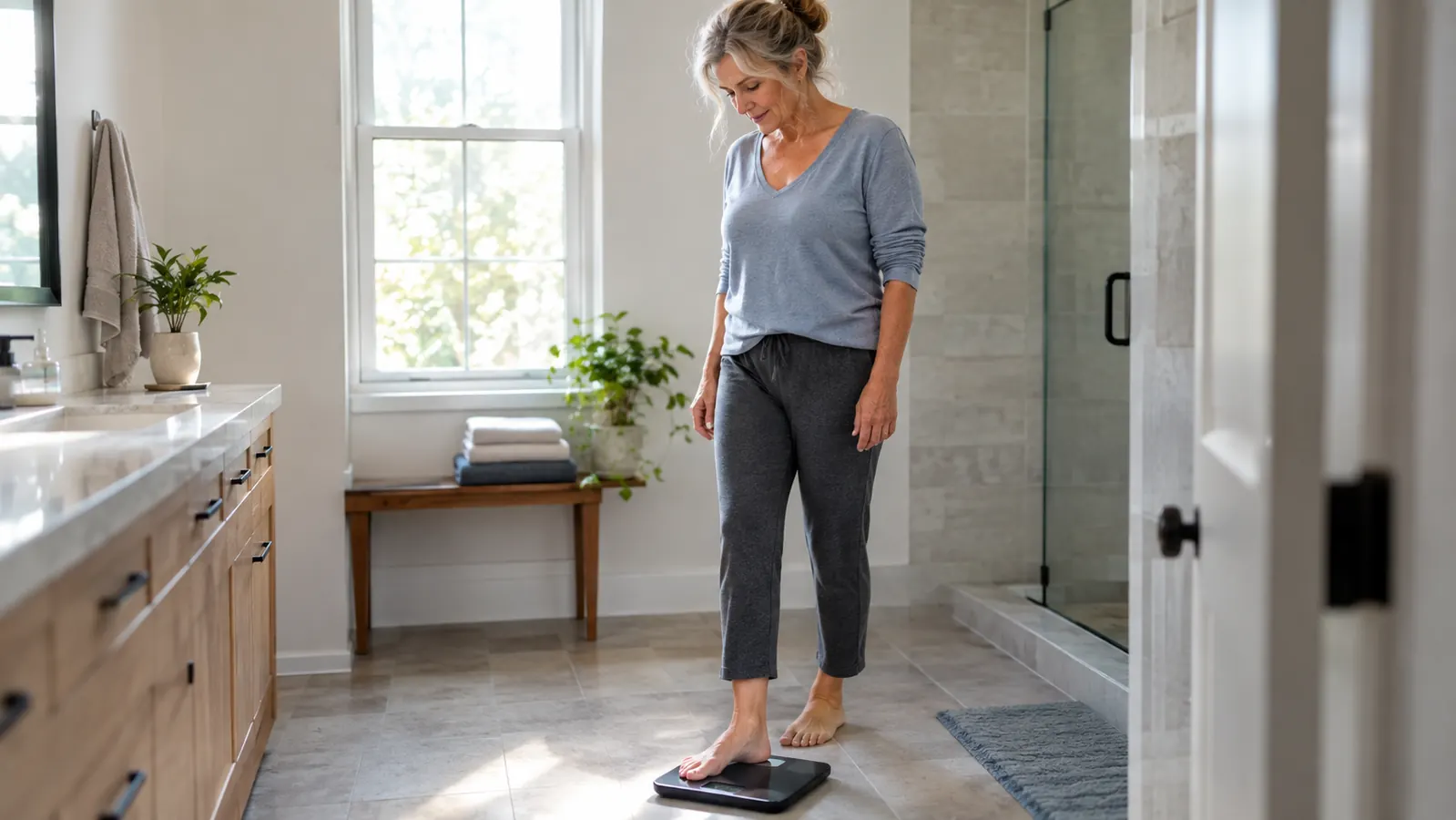
For the first year I tried to get healthier, I weighed myself the way most people do: in a panic. I stepped on the scale every few mornings, held my breath, and let the number decide how the whole day would go. If it dropped, I felt great and maybe loosened up a little at dinner. If it crept up half a pound, I felt like the whole week had been wasted, even though I had walked every morning and stuck to my meals. The scale had become the loudest voice in my head, and it was not a kind one. I knew the number was not the whole story, but I did not have a better way to look at it.
The problem was never my effort. It was the number itself. A single weigh-in tells you almost nothing on its own. Your weight moves up and down with water, salt, the time of day, and what you ate the night before. What actually matters is the direction of the trend over weeks, and that is exactly the part my old scale could not show me. When I finally switched to the Etekcity Smart Scale, it changed the question I was asking every morning, and that changed everything else. The scale did not do the work for me, but it finally showed me that the work was actually paying off.
See the trend, not the daily number
The Etekcity Smart Scale measures body weight, body fat, and BMI and draws a trend line in the app over weeks, so you stop reacting to one bad morning and start watching the direction. Setup takes about ten minutes and the whole household can use it.
Amazon Check Today's Price on Amazon →Why the Trend Matters More Than Any Single Number
Before I explain the steps, it helps to understand what the scale is actually showing you. On any given day, your weight can swing two to five pounds without any real change in your body. Water, salt, a late dinner, hormones, even the weather can move it. That is not a flaw in the scale. It is just how human bodies work. The daily number is mostly noise.
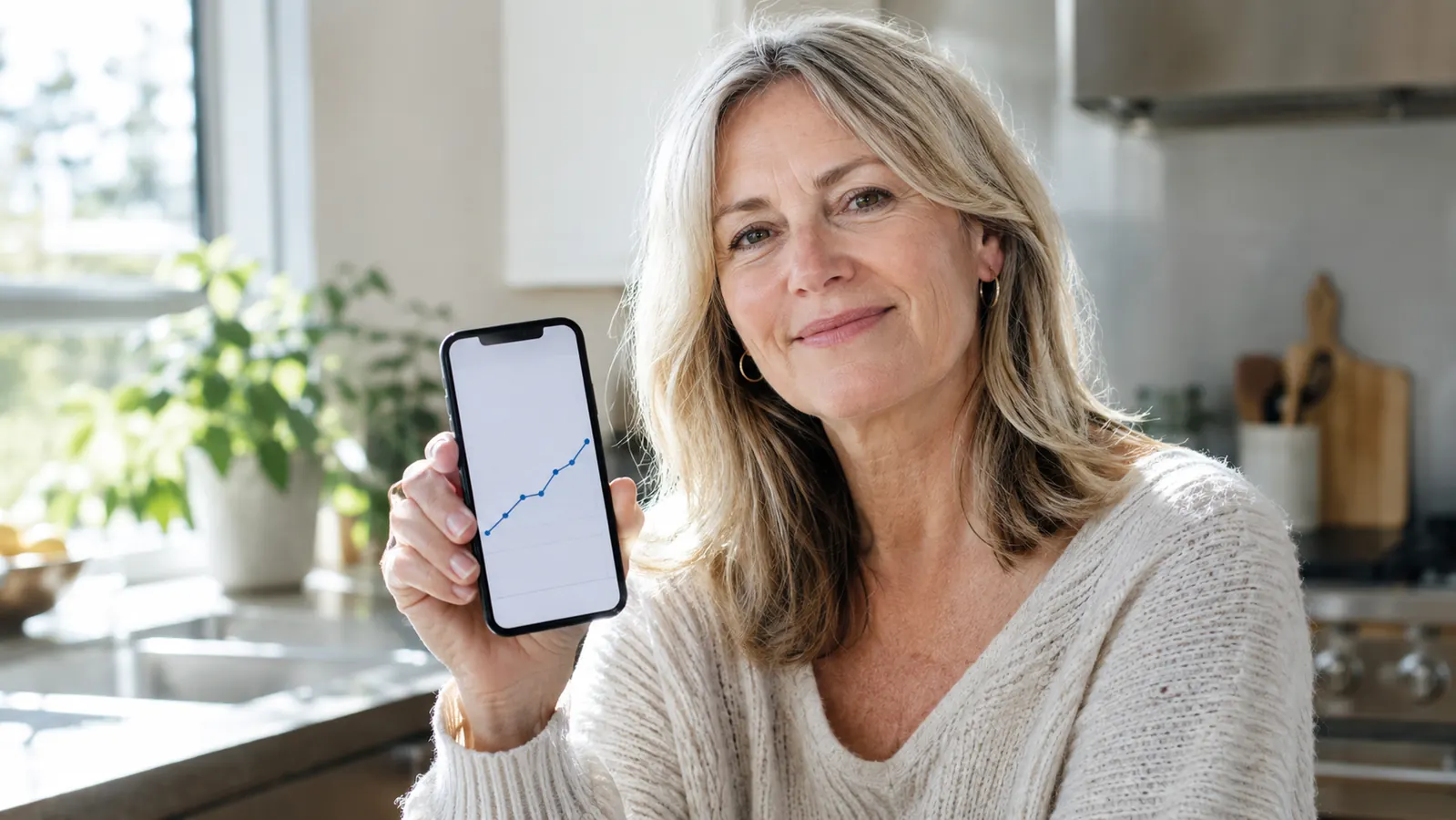
The signal lives in the trend. Weigh yourself the same way for a month and then look at the whole picture, and a real pattern appears that no single morning can show you. That is what the Etekcity app does for you. It takes every weigh-in and draws a line through them. My job is just to step on the scale and let the app do the math.
The best part is that I do not have to be good at math or keep a careful chart. The app handles all of that. My only job is to be consistent, and consistency I can do. That is what finally made the whole weight thing feel manageable instead of mysterious.
Step 1: Set Up the Scale and the App Before You Step On
The first thing I did was download the app that pairs with the Etekcity scale (it is called VeSync) and create a quick account. Then I entered my height, age, and sex. This matters more than it sounds, because the body fat and BMI estimates use that profile to make their calculations. Get it right once and you never touch it again, and it is the difference between readings you can trust and readings that confuse you.
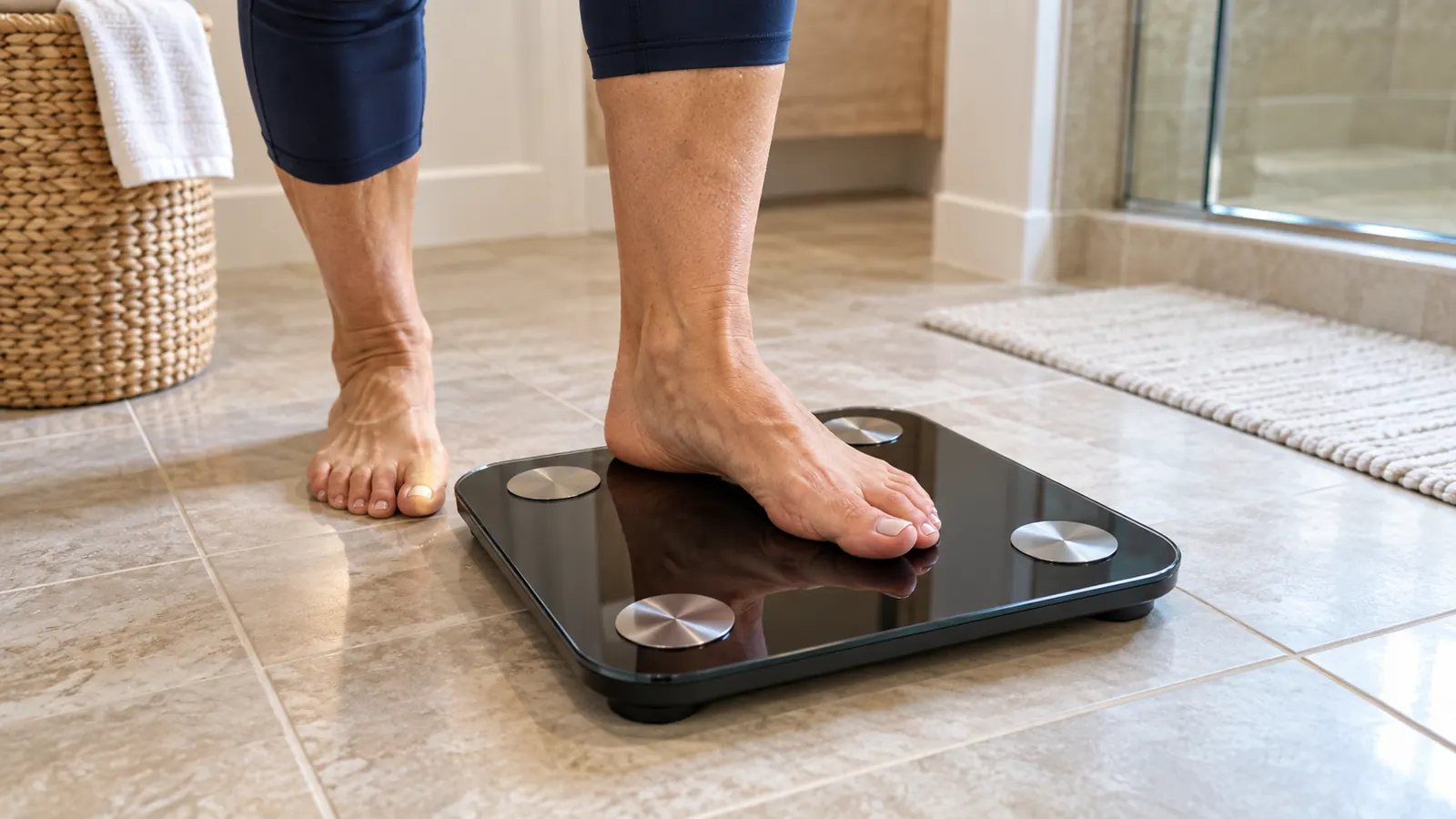
Next I put the scale on the hardest, flattest spot in the bathroom. Carpet throws off the reading, so I used the tile in front of the sink. I turned on Bluetooth, stepped on with bare feet so the sensors on the platform could make contact, and within a few seconds the reading appeared on my phone. The whole setup took me maybe ten minutes, and I am not especially handy with apps.
One thing I appreciated: the scale remembers more than one profile, so Dale can step on it and his numbers go to his phone, not mine. No mixing up our data. If you share a bathroom, that saves a lot of confusion.
Step 2: Weigh the Same Way, at the Same Time, Every Morning
Consistency is the whole game, and it is the easiest step to get right. Pick one moment: morning, after the bathroom, before food or coffee. Use the same scale, the same spot on the floor, bare feet in the same position. The scale does not care, but your trend line does. Comparing a morning weigh-in with an evening weigh-in is like comparing apples and oranges. Give it a full week before you expect the line to make sense, because the first few points are too few to show a direction.
I settled on right after I wake up and use the bathroom, before I even make coffee. It takes thirty seconds. Some mornings I do not love the number, but I have learned to stop judging it and just let it record. The app stores it automatically, so I do not even have to remember to write it down in my notebook.
If you miss a day or two, do not restart and do not panic. Just step on the next morning and keep going. The trend smooths over the gaps, and one missed morning tells you nothing about the direction you are heading. What matters is that you keep showing up most days of the week.
Step 3: Read the Trend Line, Not the Daily Point
Here is the part I wish someone had shown me years ago. The app draws a line through all your weigh-ins, and that line is what you should actually look at. On any given morning, that line might sit a little above yesterday's number. That is normal. It is water, salt, a later dinner, or just the way bodies behave.
I stopped looking at the exact number on the scale display and started opening the app to look at the line over the last two weeks. Is it heading down? Sideways? Up? That is the answer I actually need, and it is always calmer than the daily number used to make me feel. The trend line tells the truth the daily number cannot.
Give any new habit at least a month before you judge it. The trend over four weeks shows you what is actually working, and it protects you from quitting on a bad Tuesday. When I look back at my own notebook, the weeks that looked flat at the time turned out to be the ones where the slow change was already happening underneath.
Step 4: Let the Body Fat and BMI Readings Sit in the Background
The Etekcity scale also estimates body fat percentage and BMI, and I want to be honest about how I use those. They are helpful as a direction, but they are estimates from bioelectrical impedance, not lab measurements. How hydrated you are can throw them off from day to day, and so can the time of day. So I take them lightly and never let a single reading bother me.
I look at body fat the same way I look at the weight: the direction over months, not the number on a single morning. And BMI was not designed with a 57-year-old woman's frame in mind, so I use it loosely. It is one clue, not a verdict.
If you have real questions about your body composition, that is a conversation for your doctor. The scale gives you a useful arrow, but your doctor can give you an actual answer, and the two of you can talk about what number even makes sense to aim for.
Step 5: Turn Weighing Into a Weekly Check-in, Not a Daily Verdict
Here is the ritual that finally worked for me. Every Saturday morning I weigh in, then I open my spiral notebook (I have kept one for meals, steps, and how I feel since I started this whole journey) and I write down the weekly trend direction and how the week actually went. Did I walk all five mornings? Did I sleep decently? Did I eat more vegetables than usual? Those notes are the difference between guessing and knowing.
Pairing the number with the habits keeps me honest in both directions. The scale data is one clue among several, not the whole story. When the trend is flat for a few weeks, I can look at the notebook and see what I might adjust, like later dinners or a stretch of short sleep. One small change at a time, not a complete overhaul.
I also mentioned my tracking to my doctor and asked about a sensible goal range for someone my age. That conversation made the whole process feel safe and steady instead of stressful. If you are working with a doctor or taking medication, it is worth a quick check-in about your goals.
What Else Helps
The scale works because it sits inside a routine, and it has not replaced anything. It has not replaced the walking I do with my neighbor most mornings, or the short workouts in the spare bedroom, or the sleep I finally started protecting. It just shows me, in one calm line, whether that routine is moving me in the right direction. The scale measures the results of the whole plan, not any single part of it.
Keep the food, the movement, and the sleep in the picture, and keep the notebook going. If you are thinking about adding any supplement to support your routine, run it past your doctor or pharmacist first, especially if you are on other medications. The scale is the measurement, not the method, and the method is still the day-to-day work.
I also try to keep the measurement itself boring. The scale is just a tool, like the walking shoes by the door or the water bottle on my desk. When I stopped treating the weigh-in like a test, it stopped feeling like one, and I stopped dreading the bathroom in the morning.
The daily number was the noise. The weekly trend was the signal, and it was always calmer than I expected.
The Bottom Line
If you are tired of weighing yourself in a panic, a smart scale changes the question you are asking. Instead of wondering what the scale says about you today, you get to ask where the line is headed this month. That is a much kinder question, and it is the one that actually helps you keep going when progress is slow.
The Etekcity Smart Scale has been in my bathroom for months now. I weigh in most mornings, glance at the trend in the app, and get on with my walk. That is the whole point. The scale should support the routine, not run it, and when it does that, the weight loss stops being a battle and becomes something you can actually sustain.
If you are just starting out, my advice is simple: buy the scale, set it up once, and then let the trend line do the talking for a few weeks before you decide whether it is working. A month of data is worth more than a hundred opinions, including mine.
Start seeing the trend this week
Pair the Etekcity Smart Scale with your morning routine and let the app draw the line that matters. Setup takes about ten minutes, the whole family can use it, and the trend view will change how you think about weigh-ins.
Amazon Check Today's Price on Amazon →