
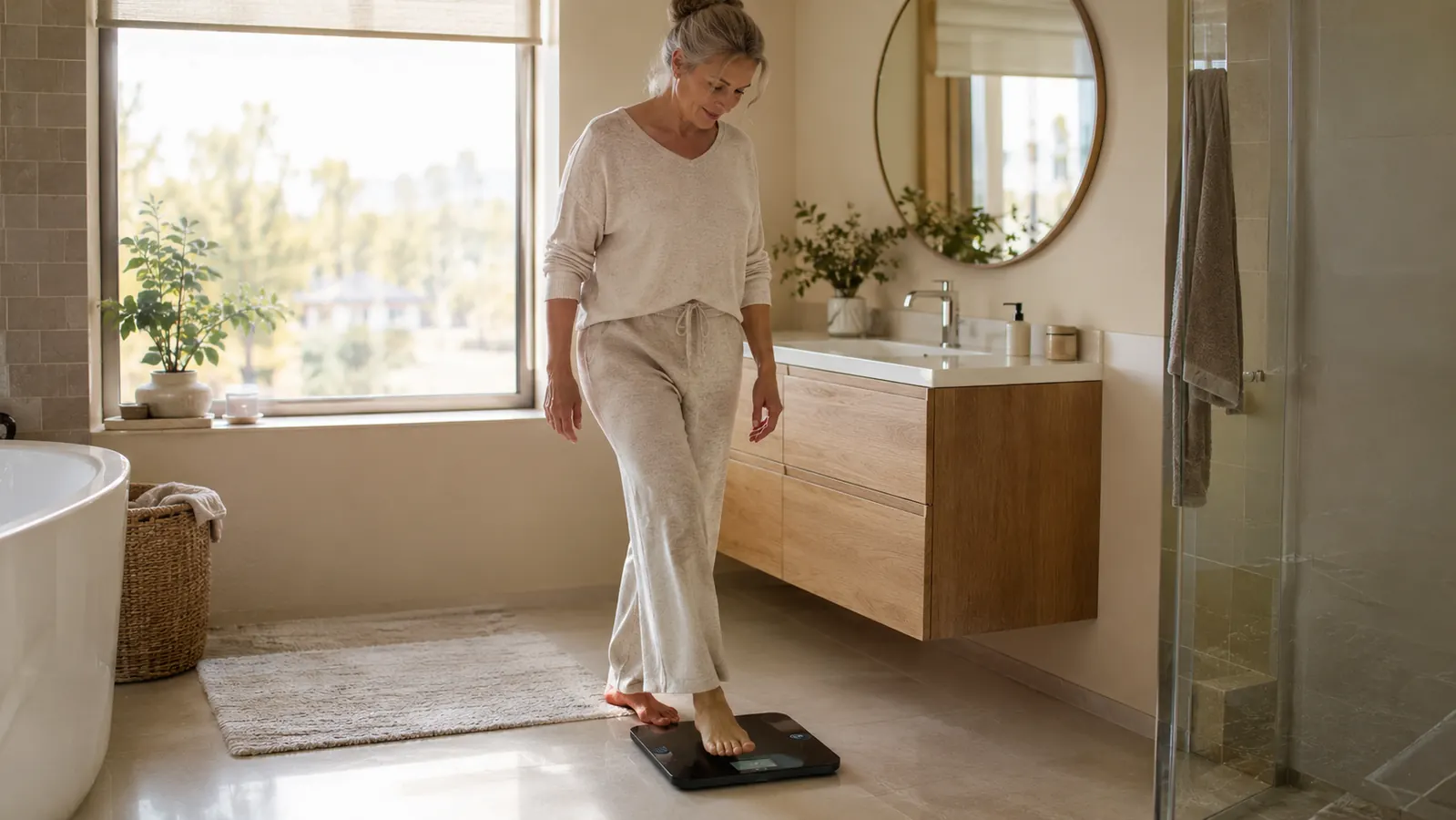
I'll be honest about something before I even get to the scale itself: I bought mine after a routine checkup, not because I was chasing a number on a box. My doctor flagged my weight at my last physical and suggested I start paying attention to trends, not just the reading on her office scale. I'm Linda, I'm 57, and I've spent the last two years walking most mornings with my neighbor and doing short workouts in my spare bedroom. That routine is what actually moved my health forward. The Etekcity Smart Scale came after, as a tool to track the work, and that distinction matters more than most reviews let on.
A quick word about what this review is and what it isn't. You will find plenty of articles claiming a smart scale will transform your weight loss. I am not going to make that claim. The scale did not lose a single pound for me. What it did was give me data I actually used, and it made parts of the process a lot clearer. It also has a few genuine frustrations that almost nobody mentions, starting with the body fat number and ending with the app. So this is the honest version: what works, what does not, and what I would tell a friend who was thinking about buying one.
The Quick Verdict
A reliable, easy-to-read scale with a genuinely useful app, as long as you treat the body fat reading as a trend to watch rather than a number to live by.
Amazon Check Today's Price →A scale that made my morning weigh-in worth doing
If you want consistent numbers and a clear trend line without paying for a subscription, this is the scale I keep coming back to. Check today's price on Amazon and see if it fits your routine.
Amazon Check Today's Price on Amazon →How I've Used It
The Etekcity scale arrived on a Tuesday in mid-June, in a plain box with the scale, a quick start card, and nothing else I needed to read twice. Setup took about three minutes. I put fresh batteries in, set it on the tile floor of the hall bathroom, and stepped on. The display lit up and gave me a weight almost immediately, which was faster than the old scale I had been using for years.
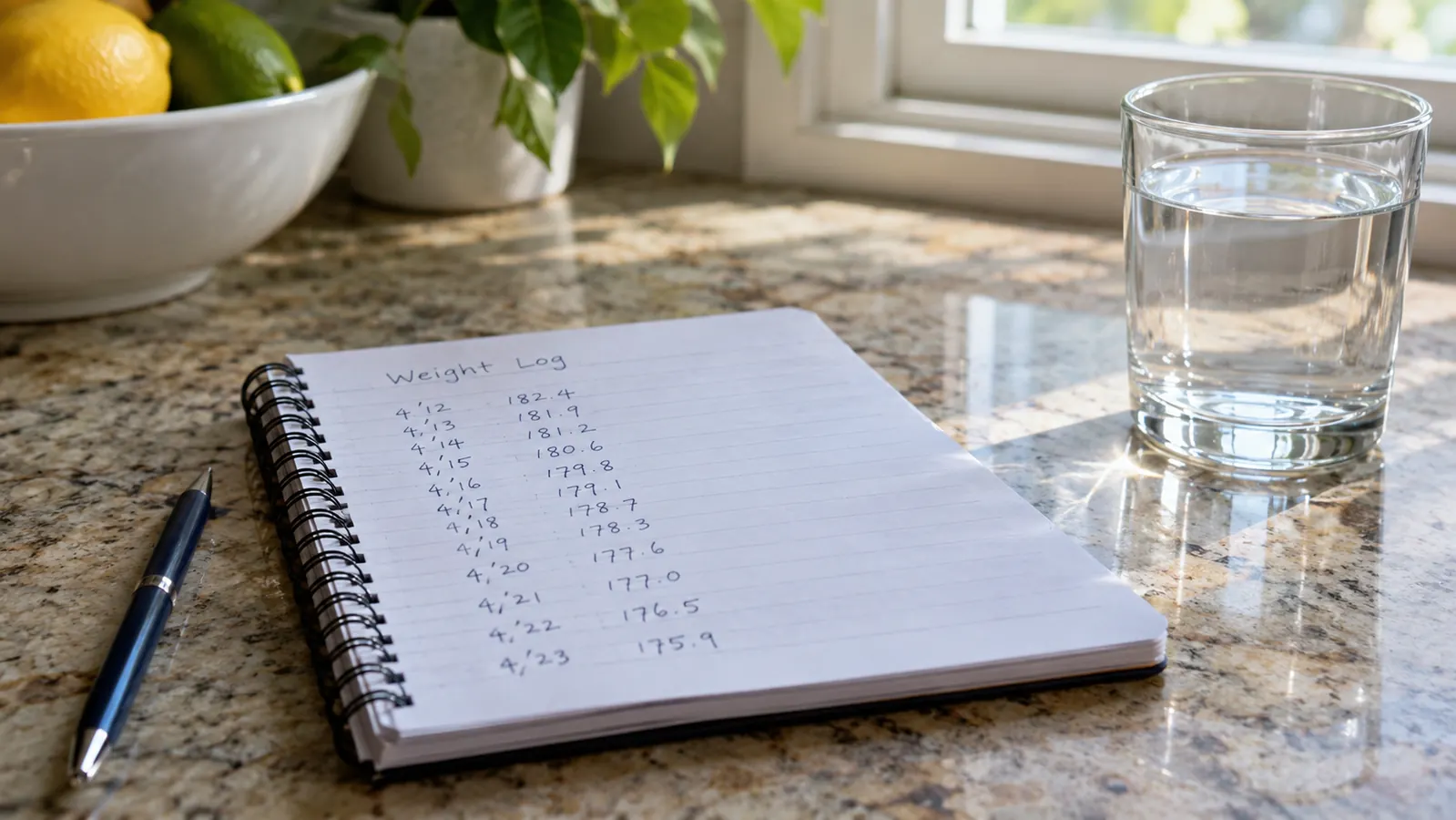
Here is the part that matters more than the device itself: consistency. I weighed myself every morning at the same time, after using the bathroom and before coffee, wearing the same light clothes. I kept a spiral notebook on the bathroom counter and wrote the number down by hand. That habit, not the scale, is what made the data useful. When you weigh at the same time every day, the noise from water and food and the time of day mostly disappears, and you start to see the actual trend.
After the first week I connected the scale to the VeSync app on my phone, mostly so I could see a graph instead of a column of handwritten numbers. I still wrote in the notebook, because I like having my own record, but the app gave me the trend line at a glance. That is where the Etekcity scale earns its place in my routine.
Setting It Up: The First Week
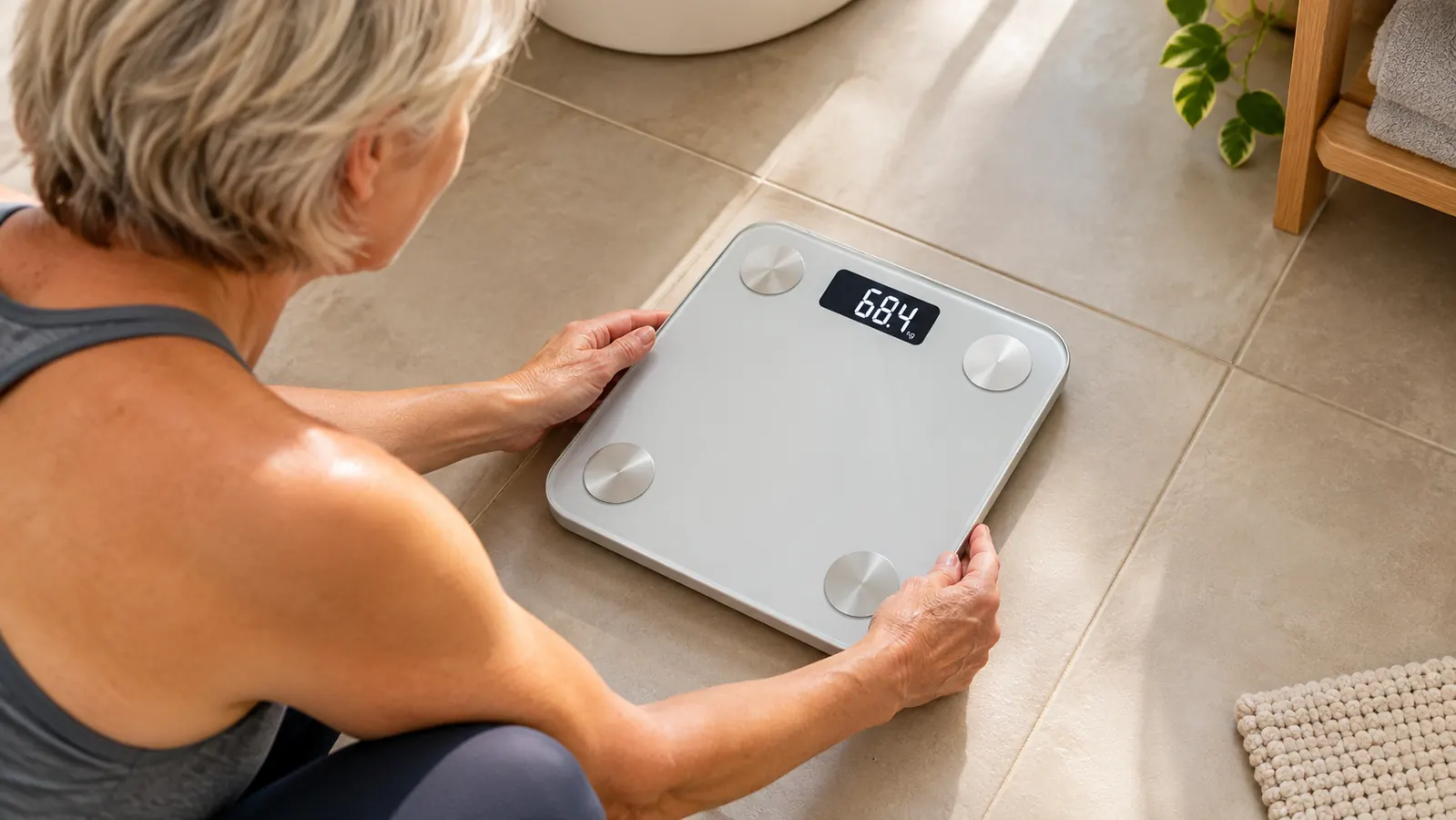
The first week was the most honest test, because that is when most people either build the habit or abandon the scale in a drawer. I set mine up on a Tuesday morning and weighed in. My old scale had been giving me a number I half-trusted for years, and the Etekcity showed me about two pounds lighter than the old one had claimed the day before. I do not know which one was right, but I know the new one was consistent, because I stepped on it three times in a row that morning and got the same number each time. That consistency, more than any single reading, is what sold me.
The app connection took a little more patience. I downloaded VeSync, created an account, and the first sync worked on the second try. The scale needs to be near the phone with Bluetooth on, and for the first few days I kept forgetting to open the app before I weighed. Once I made it a two-step habit, step on the scale then open the app, it became routine. I would put the whole setup at maybe ten minutes of actual effort, spread across the first week.
What the Scale Actually Measures
Here is what nobody tells you up front: the weight number is the only measurement on this thing that is truly precise. The scale also reports body fat percentage, BMI, muscle mass, bone mass, and water percentage, and those come from a method called bioelectrical impedance. It sends a tiny, harmless electrical signal through your body and estimates composition from how the signal travels. It is the same technology used in most consumer scales, and it is good enough to show trends, not good enough to quote at your doctor.
I learned this the hard way. One morning in early August, my body fat percentage jumped by nearly two full points from the day before, even though I had done nothing different. I panicked for about an hour, then remembered I had eaten a late, salty dinner and was probably dehydrated. By the next morning, the number was back where it had been. The same thing happens with water percentage, which swings with how much you drank the night before. If you are the kind of person who gets anxious about a single reading, keep this in mind before you buy.
What the scale is genuinely good at is showing the trend over weeks. The app smooths out the daily noise and shows you whether the line is heading up, down, or holding steady. For me, that answered a question my old scale could not: was I actually making progress, or just bouncing around the same number? My notebook could tell me the daily numbers, but the app put them in a picture I could understand.
The App: Where Etekcity Wins and Where It Frustrates
The VeSync app is the real product here, honestly more than the scale hardware. It pairs over Bluetooth, keeps your history, and draws a clean trend line. It remembers multiple users, which matters if you share the house, and it flags when your weight moves outside a range you set. I have used the history feature to look back at entire months at once, something a paper chart would make me do by hand.
But the app has real frustrations that reviews gloss over. First, it wants you to create an account and sign in, and it prompts you to allow notifications and location and data sharing on the first run. I declined the extras and it still worked, but the setup feels pushy. Second, the scale does not sync on its own. You have to have the phone nearby and the app open or at least running in the background, or the reading just sits on the display until you open the app. If you weigh in a different room than your phone lives in, you will forget to sync, and then you have a number with no graph entry.
Third, the app occasionally shows me a weight that does not match the number I saw on the display, usually by a few tenths of a pound, and I have never figured out exactly why. It corrects itself on the next sync, but for someone who keeps a notebook, that mismatch is annoying. None of these are deal breakers. They are the honest downsides that a product page will not show you.
The Downsides Nobody Mentions
Let me give you the list of things I wish someone had told me before I bought it. The scale needs a flat, hard surface. On carpet it gives readings that bounce around by several pounds, so it has to live on tile or wood or a very firm mat. If your bathroom floor is carpeted, factor that in.
The body fat number changes with hydration, time of day, and even whether you just exercised. Treat it as a trend, not a fact. The scale also wants to be on a perfectly level floor, and on some older bathroom floors that wobble, the reading can shift. And while the batteries lasted me a long time, the manual says they can run down faster if you leave the app syncing in the background, so I turn Bluetooth off when I am not weighing.
The biggest thing nobody mentions is simpler than all of that: a smart scale is only as useful as your willingness to use it consistently. If you weigh yourself once a week at random times, the data will confuse you more than it helps. The Etekcity scale is a good tool, but it rewards the same boring habit my doctor pushed, showing up every day and writing it down.
The Display and the Everyday Details
The display is the quiet hero of this scale. It is bright and large, and I can read it first thing in the morning without reaching for my glasses, which was not true of my old scale. It also shows your weight steadily, without the flickering that cheaper scales do, so you are not squinting at a number that keeps changing. The step-on surface is wide enough that I never felt like I was going to miss the edge, which matters when you are half awake.
Battery life has been genuinely good. I put in the included batteries in June and I have not had to change them yet, which is better than I expected from a device that talks to a phone. The one habit that protects the batteries is turning Bluetooth off when I am not weighing, because the scale seems to drain faster when it is constantly looking for the phone. That is a small thing, but it is the kind of detail a product page will never tell you.
The Plateau That Almost Broke My Streak
In early October I hit a stretch where the number on the scale did not move for almost three weeks. Same morning routine, same meals, same walks, and the line on the app went completely flat. My old scale would have just shown me the same number day after day, and I probably would have gotten discouraged and quit. What the app showed me instead was that the flat line was the story, not a failure, and that my clothes fit a little looser even though the weight was holding. That distinction, between weight and the way my body actually felt, is something the data helped me see.
I talked to my doctor about it at my next checkup, and she reminded me that plateaus are normal and that the scale is one tool among many. She suggested I pay attention to how I felt on my walks and how my sleep was, not just the number. I still weighed every morning, but I started writing how I felt in the notebook next to the number. That turned out to be the most useful column in my whole record, and it came from the scale making me show up every day in the first place.
What Actually Changed for Me
The honest answer is that the scale did not change my weight. What it changed was my awareness. In late September, I caught a slow upward creep in the trend line about ten days before I would have noticed it on my own. It was small, maybe a pound and a half over two weeks, but it was consistent, and the app made it visible. I tightened up my portions and added an extra ten minutes to my morning walk, and the trend flattened back out.
That is the real value of this scale, and it is the part no advertisement will sell you. It is not a weight loss tool. It is an early warning system that works only if you look at it. I still pair everything with the basics my doctor and I talk about: reasonable meals, my morning walks with my neighbor, and getting to bed at a decent hour so I sleep well. The scale sits on top of that routine, not instead of it.
I also want to be straight about one more thing. If you are considering this scale because you think buying it will somehow make the weight come off, save your money. It will not. What it will do, if you use it the way I did, is show you whether the work you are already doing is moving the needle. That is a real benefit. It is just not the benefit the marketing implies.
What I Liked
- Weighs instantly and displays a clear, bright number you can read without glasses
- The app draws a trend line that smooths out daily water and food noise
- Remembers multiple users, so two people can share one scale
- FSA eligible, so you may be able to pay for it with pre-tax dollars
- No subscription fee, which is rare among connected scales
Where It Falls Short
- Body fat and water readings swing with hydration and are trend-only, not precise
- Needs a flat, hard floor; useless on carpet
- App requires an account and pushes notifications and data sharing at setup
- Sync only works when your phone is nearby, so readings can sit unsynced
- You can get the same weight trend with a cheap scale plus a notebook
The scale did not lose a single pound for me. What it did was give me data I actually used.
Who This Is For
This scale is for someone like me: a person who is already doing the work, walking, cooking reasonable meals, trying to sleep better, and wants a clear picture of whether it is paying off. If you weigh yourself at the same time most days and you like seeing a trend instead of a scattering of numbers, the Etekcity scale will serve you well. It is also a good fit if you share a house, because it sorts multiple users automatically, and if you want to avoid yet another monthly subscription.
Who Should Skip It
Skip it if you get anxious about daily numbers and one bad reading can wreck your morning, because the body fat number will occasionally jump for no real reason. Skip it if your bathroom is carpeted and you are not willing to keep the scale on a hard mat. And skip it if you are hoping the scale itself will motivate you, because the motivation has to come from somewhere else. A basic scale and a notebook will give you most of the same benefit for a fraction of the cost. Buy this one because you want the trend line and the convenience, not because you expect it to do the work.
The honest bottom line
The Etekcity Smart Scale is a well-made tool that earns its place if you already have a routine and want to track it. It is not magic and it will not do the work for you. If that sounds like what you are looking for, check today's price on Amazon.
Amazon Check Today's Price on Amazon →